
Dr. Marie Dubois
France
The Ethiopian wolf is the rarest canid on Earth. Fewer than 500 remain. On a cold morning on the Sanetti Plateau, we watched seven of them hunt in the golden light.
“"I've been coming here 12 years," our guide said. "I have never seen seven in one morning." He was crying.”
I'm a wildlife biologist. I had published papers on Ethiopian wolves — on their diet, their territory, their alarmingly low genetic diversity. I had never seen one in the wild. That is the absurdity of the field: you can know a species completely on paper and never once meet it in person.
The Sanetti Plateau is 4,000 metres above sea level, a wide empty moorland that feels less like Africa and more like the surface of another planet. We drove in darkness, and the guide, a man who has walked these slopes for twelve years, said almost nothing. In the back of the 4x4, I pressed my face to the cold window like a child.
6:04am
The first wolf appeared from behind a rock at 6:04am. I wrote the time in my notebook without thinking. A moment later a second, then a third, then more than I could count in real-time — seven wolves total, gathering in the golden low light of the plateau, hunting the giant mole-rats that are almost their entire diet. Our guide, twelve years in this place, had never seen seven in one morning. He was crying.
The Ethiopian wolf is Africa's most endangered carnivore. Fewer than 500 adults survive, almost all confined to the highlands of Bale and the Simien — a population on the knife's edge.
The species in numbers
- ~500 adults remaining worldwide
- A single wolf survives on roughly 10,000 mole-rats a year
- Nearly all of them live above 3,000 metres
- One of the oldest wolf lineages on Earth
I spent three more days on the Sanetti Plateau after that first morning. I didn't see a single wolf. That is how conservation works — it is not a reward system, it is a gift economy. The morning they gave me is the one I will spend the rest of my career trying to protect.
Before, During & After
Before
I'm a wildlife biologist. I had published papers on Ethiopian wolves. I'd never seen one in the wild.
During
The first one appeared from behind a rock at 6:04am. I wrote the time in my notebook.
After
I spent three more days on the Sanetti Plateau. I didn't see a single wolf. That first morning was everything.
Ready to write your own story?
This is one traveler's story. Yours is waiting in the Simien Mountains, Lalibela, and beyond.
Next Story
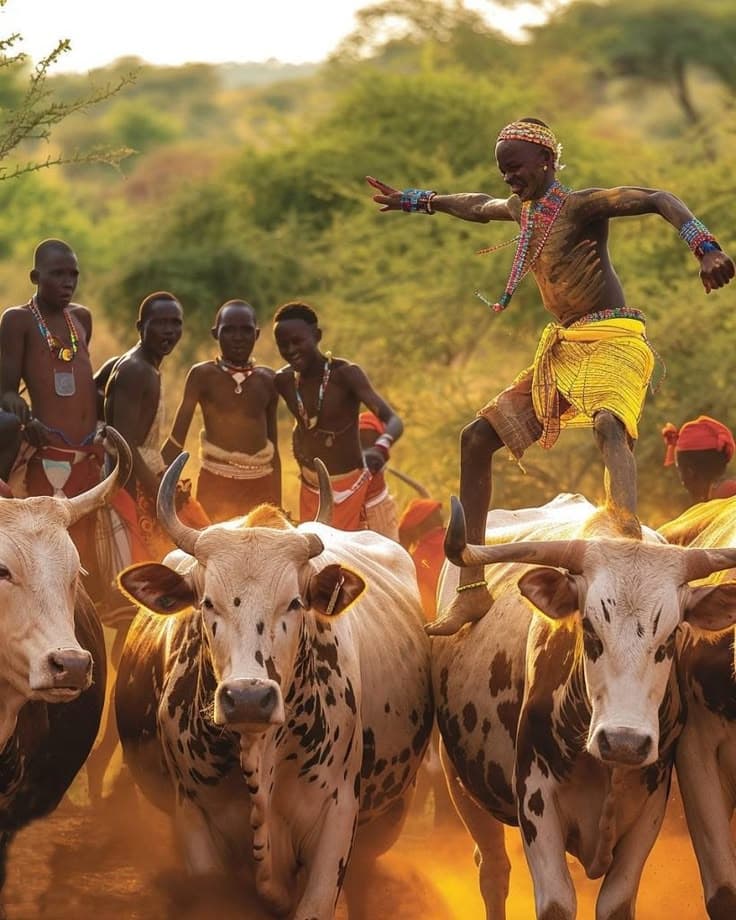
The Bull Jumping Ceremony: A Rite of Passage I Was Allowed to Witness
Omo Valley · James O'Brien